

Behind the Scrubs with Dr Richard
11 mins read
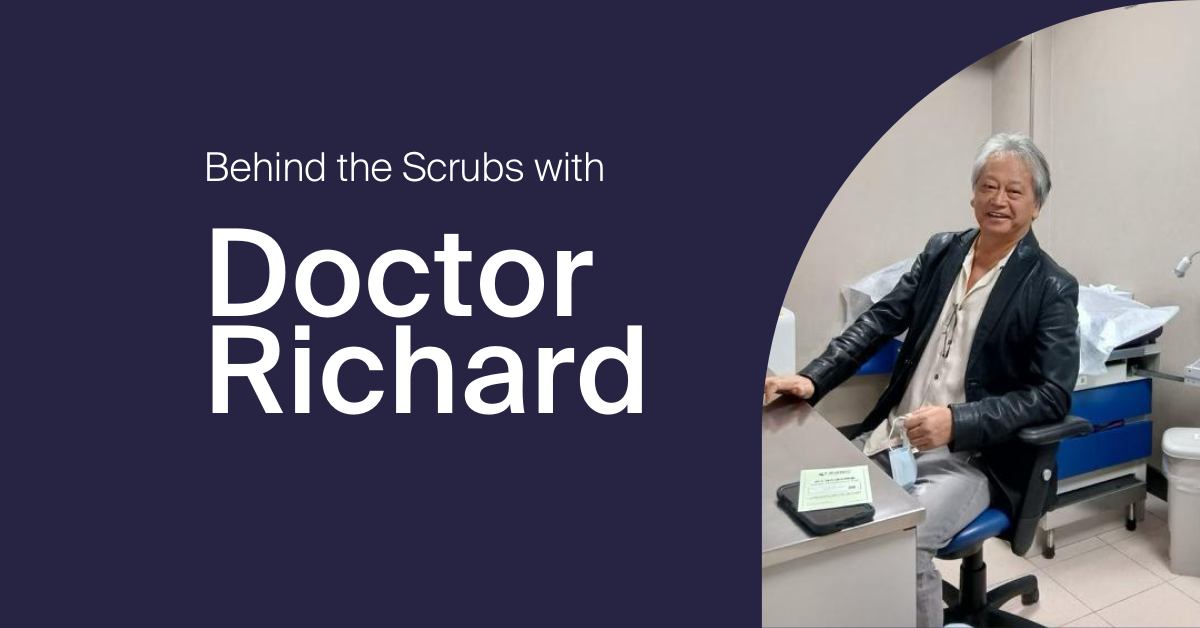
In this edition of Behind the Scrubs, we hear from Dr Richard, who has embraced the locum lifestyle with Blueprint Medical’s support.
Throughout my medical career and training, I have been privileged to work within tertiary university hospitals across Hong Kong, the United Kingdom, and Australia—specifically in Brisbane and Melbourne. These institutions have offered me exposure to highly specialised, resource-rich, and academically driven environments. Now, as I have recently reached seventy years of age, I find myself at a natural crossroads: the transitional phase toward retirement.
After consulting various colleagues and mentors who have recently retired, I became increasingly reflective about how to manage this new stage of life. Several of them described finding it difficult to retire completely after decades of active practice. One former colleague, in particular, shared his experience of engaging in locum work in rural and regional Australia during his transition, which allowed him to stay professionally active while contributing meaningfully to underserved areas.
This idea resonated with me deeply. Having spent my entire professional life in tertiary hospital systems, I found the notion of applying my expertise to remote obstetrics and gynaecology (O&G) both appealing and humbling. Moreover, after reviewing workforce data from the Royal Australian and New Zealand College of Obstetricians and Gynaecologists (RANZCOG), I was struck by the extent of maldistribution within the profession. According to RANZCOG, “over 80% of the specialist O&G workforce are based in MMM1, and only around 8% are based in MMM 3–7,” highlighting a critical undersupply of consultants in rural and regional Australia (RANZCOG, 2022).
Inspired by this data and my own curiosity, I decided to embark on locum work as a way of both giving back and expanding my professional horizons in the latter phase of my career.
Journey So Far
1. Logistics of Finding Locum Work
My first step was to navigate the practicalities of entering the locum workforce. I was introduced to several supportive agencies who guided me through the credentialing and administrative processes. They provided detailed checklists of documentation I needed to supply, which included:
- A current CV with referees
- Certified personal identification (passport, driver’s licence, Medicare card)
- Working with Children Check
- National Police Check
- Current AHPRA and RANZCOG registration
- Medical indemnity insurance
- Evidence of Fetal Surveillance Education (FSE)
- PROMPT (Practical Obstetric Multi-Professional Training) certification
- Neonatal Resuscitation and Basic Life Support (BLS) certification
- Up-to-date immunisation records relevant to obstetric care
Additionally, I was required to clarify my employment arrangement—either as a hospital employee, agency contractor, or as a sole trader with my own ABN registration—and to obtain a provider number for each health service. Each state imposed its own e-learning requirements on rural and regional healthcare, meaning I had to complete separate modules for New South Wales, Victoria, South Australia, Tasmania, and Western Australia.
While these logistical hurdles were time-consuming and varied considerably between jurisdictions, the agencies generally facilitated travel arrangements such as flights, car hire, and accommodation. However, due to the remoteness of some placements, it was not uncommon to face additional travel—sometimes up to three hours by car after landing at the nearest airport.
Accommodation quality varied widely, underscoring the importance of securing suitable housing prior to arrival.
2. Different Kinds of Hospital Setups
Across my locum experiences, I encountered a wide range of hospital configurations.
- University-affiliated hospitals often mirrored the tertiary institutions I was accustomed to, complete with RANZCOG trainees, registrars, and consultant-led teams.
- Regional hospitals, however, tended to rely heavily on overseas-trained doctors—some undergoing RANZCOG assessment or bridging processes to obtain local accreditation.
- In a few remote hospitals, I was the sole consultant on site, supported by only one junior doctor or, at times, by experienced midwives without GP or specialist backup after hours.
These varying setups required flexibility and adaptability, as the level of clinical support and infrastructure differed markedly from one location to another.
3. Experience Working in These Settings
Working as the only consultant in a hospital demanded a high degree of self-reliance, particularly in situations where there was no paediatrician available. This necessitated competence in neonatal resuscitation and acute obstetric emergencies.
In hospitals where the workforce comprised mainly overseas-trained doctors, it initially proved challenging to gauge individual skill levels during short placements. However, after repeat locum engagements, I found the majority of these clinicians to be highly capable, professional, and collaborative.
Conversely, locum placements within university hospital units felt familiar, with well-established multidisciplinary teams and structured hierarchies.
In hospitals largely run by midwives, I observed impressive levels of autonomy and skill, though the absence of medical staff after hours could at times create heightened responsibility and clinical pressure.
In some locations, I worked with the midwives to set up Practical Obstetric Multi-Professional Training (PROMPT) simulation. The three-hour simulation was focused on maternal (post patrum haemorrhage) PPH involving MET and MHP activation. I also completed other coursework in perinatal safety education (foetal and maternal).
4. Patient Demography and Characteristics
One of the most profound aspects of my rural locum experience has been working with a wide range of patient populations, each shaped by the unique social, economic, and cultural realities of regional and remote Australia. Clinical presentations were often influenced by factors such as geographic isolation, limited access to specialist care, housing instability, and socioeconomic disadvantage.
A significant proportion of my patients were First Nations peoples, whose health needs required a culturally safe and respectful approach. This meant not only acknowledging the historical and intergenerational impacts on health but also adapting communication, building trust, and recognising differences in health-seeking behaviours. The role of community, family, and cultural practices was apparent in many interactions, and this often guided how care was delivered.
For example, many First Nations patients in antenatal care received repeat syphilis screening at multiple points in pregnancy, which is far more frequently than would occur in metropolitan settings, where two routine screens are standard. This reflects the heightened prevalence of infectious diseases in some remote communities and the public health strategies required to manage them effectively. Providing this care reinforced the importance of tailored screening, community-specific risk assessment, and ongoing collaboration with Aboriginal Health Workers and midwives to ensure care remained both clinically appropriate and culturally safe.
5. Additional Case Scenarios
Case One
I was on call one weekend when, at 3 a.m., I received a call about a patient in active labour at a remote clinic three hours from our base hospital. This was her fourth pregnancy, and she had undergone three previous Caesarean sections. She had been advised to stay near the hospital from 37 weeks onward but had not done so.
At the remote clinic, the rural midwife assessed her to be in advanced labour, already 9 cm dilated, with some vaginal bleeding. The clinic had no birthing facilities; all patients in early labour are normally transferred to our hospital. In this case, however, a decision had to be made about whether she should remain at the clinic or attempt transfer.
Because of her advanced labour and obstetric risk factors, she could not be safely transported without medical or nursing escort by road or air. I advised the midwife not to transfer her and explained that she would likely deliver imminently at the clinic. I also notified the hospital registrar, midwifery team, and theatre staff so they could prepare in case she required transfer postpartum.
I received no further updates overnight. When I arrived at the hospital at 8 a.m. for morning rounds, I enquired about the patient. I was informed that she had delivered successfully at the remote clinic, had been transferred to our unit afterward, and had discharged herself an hour after admission.
I was relieved that this case had a good outcome, given the significant risks of neonatal death or uterine rupture associated with her circumstances.
Case Two
At 3 a.m., after completing an emergency theatre case for a patient with postpartum haemorrhage, I walked out through the hospital’s front entrance to retrieve my car. As I opened the driver’s door, a man approached and opened the passenger door, asking for a cigarette. I informed him that I did not have one. He then asked for money, which I also declined. He responded with a derogatory comment, and I noticed several other individuals approaching the vehicle.
Acting quickly, I started the car and reversed. The man standing by the passenger door stepped back and fell to the ground as I manoeuvred the car away. I then turned onto the main road and left the area safely.
Later that morning, I reported the incident to hospital security. They advised me to park in the secured staff car park located at the back of the hospital, which is gated and monitored, particularly for staff who need to leave during early morning hours.
I was fortunate to have been able to remove myself from the situation without harm. The experience reinforced the importance of personal safety for staff working overnight shifts and highlighted the need to use secure parking areas, even when tired after emergency work.
6. Problems Facing Rural and Remote Hospitals
Through these locum placements, I have come to appreciate the systemic issues that impede sustainable healthcare delivery in rural Australia. Key challenges include:
- Staffing shortages in O&G and other critical specialties
- Patient transfers to tertiary centres for complex cases, often delayed by geography or weather
- Inadequate hospital infrastructure and resource limitations
- High costs associated with relocating and accommodating qualified personnel
- Shortage of senior supervision for junior staff
- Constraints on time and access for continuing professional development (CPD)
Recent data highlight the scale of these challenges. For example, only 13% of Australia’s health and medical workforce is located in regional, rural, or remote areas, despite these communities comprising around 30% of the population (National Rural Health Alliance 2024).
Workforce distribution is even more stark in smaller rural towns classified as MM5 under the Modified Monash Model, where there are approximately three times fewer doctors per capita than in metropolitan areas, and around half the number of nurses and allied health professionals (University of Wollongong 2024).
7. Local Experience
Working in regional and remote settings has given me the opportunity not only to practise medicine in a different context but also to experience the cultural, historical, and geographic diversity of rural Australia. Outside of clinical duties, I made a conscious effort to explore the communities in which I was working, as this helped me better understand the lives of the patients I cared for.
I found that many regional towns had surprisingly vibrant culinary cultures. Some offered excellent Indian, Vietnamese, or Italian food, and I often enjoyed taking myself out to these local restaurants, sitting down with a meal and a drink, and absorbing the atmosphere—much in the spirit of Anthony Bourdain’s belief that food is a gateway to understanding a place and its people. These moments helped me feel connected to the community and provided a sense of grounding during intensive clinical weeks.
I also took the opportunity to visit local historical sites, including a restored 19th-century jailhouse. Seeing these settings firsthand offered insight into the history of rural isolation and the development of these communities over time. Additionally, exploring the outback and the scenic rim highlighted the sheer scale and environmental extremes of Australia. The vastness, heat, and dryness of the landscape were striking and starkly different from the major cities I was accustomed to.
These experiences broadened my appreciation of the cultural richness and environmental challenges that shape regional life. They also deepened my understanding of the context in which rural health services operate and strengthened my connection to the communities I was temporarily part of.
Engaging in locum work across rural and regional Australia has been an enriching and eye-opening phase of my career. It has allowed me to appreciate the diversity of clinical environments beyond the tertiary system and to witness firsthand the dedication of healthcare professionals working under constrained conditions.
As I continue navigating the transition toward retirement, this experience has reaffirmed the value of remaining connected to clinical practice—not merely as a professional duty, but as a form of service, mentorship, and personal growth.
If you are considering a move to Australia, the demand for doctors is clear. Let us help you take the next step.
Get in touch with our team today: https://bit.ly/BluePrintContactUs